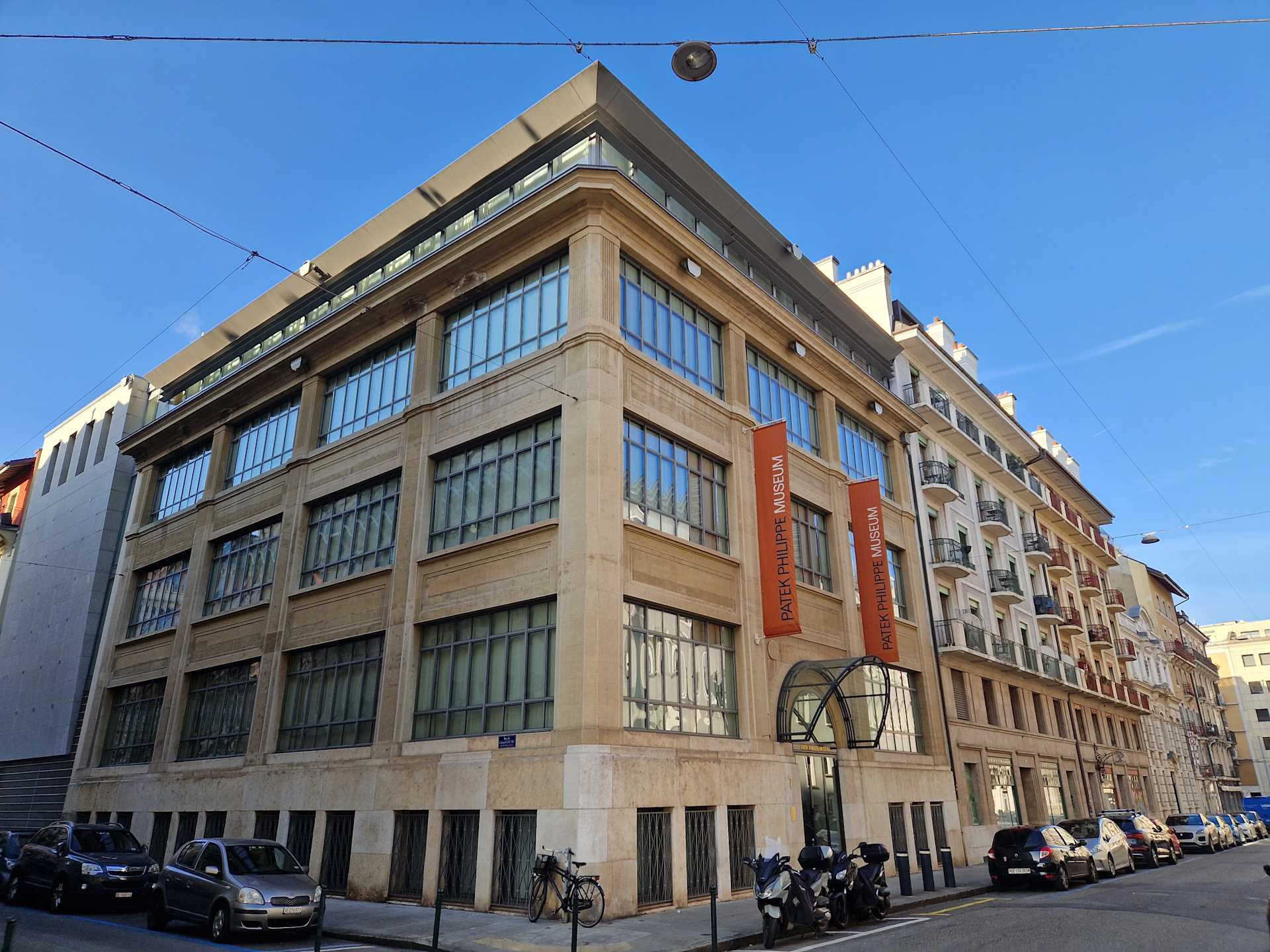
Patek Philippe started the Watch Art Grand Exhibition in 2012 to show its heritage, its current collection and its craftsmanship away from Geneva. The seventh edition came to Milan for the first time, from 2 to 18 October 2026. It covered around 2,500 square metres, with about 500 timepieces and objects, and more than 90 pieces on loan from the Patek Philippe Museum. It was the largest set the house has ever built for one of these shows, and entry was free.
The Building
The exhibition sat under a dome almost thirty metres high at CityOval, the renovated Palazzo delle Scintille, in the CityLife district. CityLife is the newest part of Milan, with three towers by Zaha Hadid, Arata Isozaki and Daniel Libeskind around a walkable quarter that feels like a small city of its own.
Patek Philippe chose the most contemporary corner of Milan to show objects whose oldest examples go back to the 16th century. I think that gap was the best decision in the whole exhibition. A glass and steel district on the outside, and inside it a recreation of the Geneva salon, the workshops and the museum. The dome held the room, and the room held centuries.

What a Watch Holds
The show was organised into themed areas, from the Master of Sound room to a section on Advanced Research and a set of supercomplications. The pieces tied to historic owners were the ones that made people stop walking.
A watch carries the person who wore it. The warmth of a wrist, the hours they looked at it, the days they were waiting for something. A Patek Philippe that belonged to one specific person in one specific century is a record of how that person lived through time, which is a different thing from an antique. Jewelry decorates a body. A watch counts for it, and what it counted stays inside.

Details Worth Looking For
Most coverage listed the headline pieces. These are the smaller things I noticed.
The sapphire caseback of the new reference 5978P is engraved “Patek Philippe Milano 2026,” so the city is written on the inside of the watch, where only the wearer will ever see it. That watch is an instantaneous perpetual calendar chronograph, and its four aperture discs flip in about thirty milliseconds.
The City of Milan table clock puts the Duomo on a map of the city in gold, worked in paillonné enamel. Only three exist. And the 25 Rare Handcrafts made for this edition are reserved for the Italian market, so they are Italian subjects made for Italian owners.
Why the Calendar Matters
This edition also marked 85 years since Patek Philippe combined a perpetual calendar and a chronograph in one watch. A perpetual calendar knows how long each month is and when a leap year arrives, and it never needs correcting. I think of it as a quiet mechanism that keeps its knowledge to itself, much the way a building holds its history without announcing it.
Rare Handcrafts
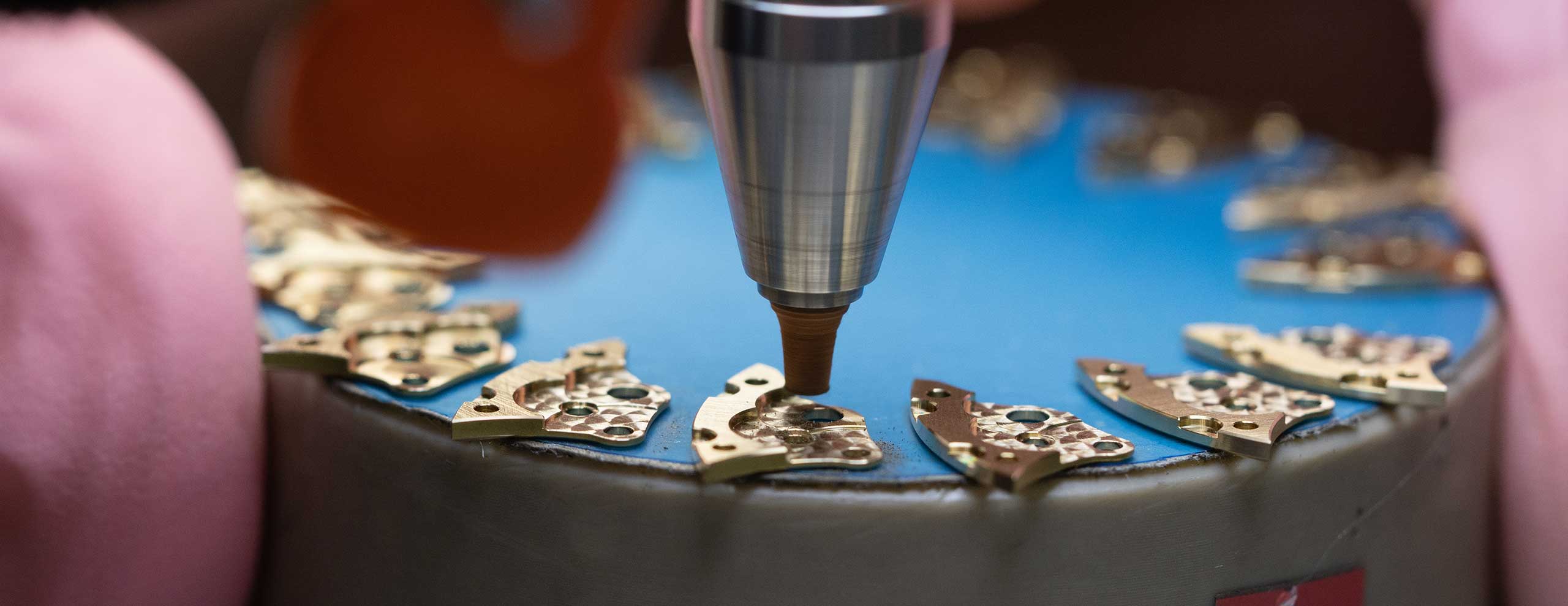
This is where watchmaking and decorative art become the same craft: enamel miniatures, cloisonné, engraving, gem setting. These are techniques older than the industrial age, applied to objects that fit in the palm. The people who made them trained for decades, and the pieces will outlive them by centuries.
Obsessing Over
The Dante pocket watch, reference 995/151G.

It is a one of a kind white gold piece based on Botticelli’s portrait of Dante, painted around 1495. The poet stands in profile against deep blue enamel, with stars made from gold powder. Around him, architectural lines frame drawings that Botticelli made for the Divine Comedy.
The numbers tell you how slow it was to make. Around 14 enamels, about 19 centimetres of gold wire, and 25 firings at 800 degrees. The enameller, who is officially retired, said it took her nearly four months. The case is 44.1 mm, with a blue enamel cabochon on the crown and a manual wind movement inside. The white gold stand has rutile quartz in it and sits on a lapis lazuli base with flecks of pyrite.
The stars are what stay with me. Each of the three parts of the Divine Comedy ends with the same word, stars. So the gold powder on this dial echoes the poem, three times over. Dante wrote about a journey through the afterlife, and here a man who spent his life writing about time and eternity is held in a case you can carry in your pocket. It is a very small room for a very large idea, and it is exactly what the dome in Milan was built to hold.